AI Email Funnel Builder: The Complete Guide to Automated Email Campaigns That Convert
In today's digital marketing landscape, email funnels remain the highest-converting channel for nurturing leads and driving sales. But building effective email sequences that convert prospects into customers has traditionally required hours of strategic planning, copywriting, and technical setup. Enter the AI email funnel builder – a revolutionary approach that transforms how businesses create, optimize, and scale their email marketing campaigns.
If you are already comparing email automation platforms, AI writing tools, and marketing workflow software, this guide will help you understand where an AI email funnel builder fits in the stack. You can also pair it with our guides to the best email marketing software for high deliverability, best email automation sequences for ecommerce revenue, and how EmailFunnelAI's agentic workflow saves hours for marketing teams to build a complete email growth system.
What Is an AI Email Funnel Builder?
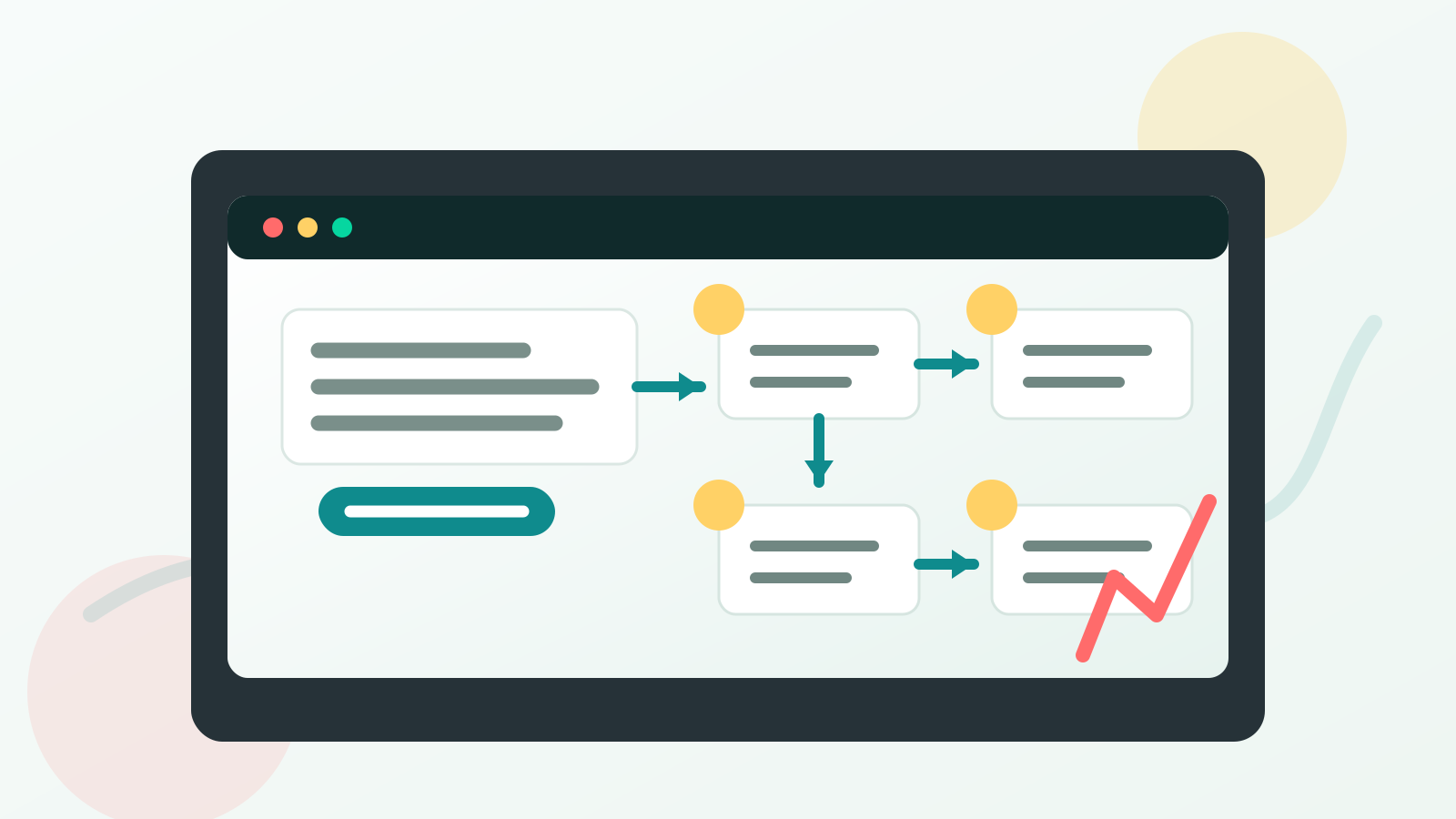
An AI email funnel builder is an intelligent marketing automation tool that uses artificial intelligence and machine learning to generate complete email campaigns from simple prompts. Unlike traditional email marketing platforms that require you to write every email from scratch, AI-powered funnel builders analyze your campaign goals, audience, and offerings to create sophisticated email sequences with proper timing, personalization, and conversion optimization built in.
Think of it as having an expert email marketing strategist, copywriter, and automation specialist working together in seconds – you describe what you want to promote, and the AI generates the entire funnel including subject lines, email copy, call-to-action buttons, send timing, and follow-up sequences as one connected campaign.
How AI Email Funnel Builders Work
The process is remarkably simple yet powerful:
- Input Your Campaign Brief: Describe your campaign goals, target audience, product or service, and desired outcome in plain language
- AI Generates Complete Funnel: The system creates multiple emails with strategic sequencing, personalized content, and optimal timing
- Review and Customize: You maintain full control – edit every word, adjust timing, and brand the content before sending
- Launch with Confidence: Built-in pre-send checks catch broken links, timing issues, and other common mistakes
Modern AI funnel builders like EmailFunnelAI go beyond basic email generation. They understand customer psychology, buying triggers, and the optimal cadence for different types of campaigns – from welcome sequences to abandoned cart recovery to product launches.
The practical difference is that an AI email funnel builder works at the campaign level, not just the paragraph level. A basic AI writer might help you draft one email. A funnel builder helps you decide what the first email should accomplish, what the second email should reinforce, when the third email should handle objections, and how the final email should push toward conversion without sounding disconnected from the rest of the sequence.
That distinction matters for SEO, sales, and customer experience because email funnels are rarely judged by one message in isolation. Subscribers experience the whole journey. Searchers looking for an "AI email funnel builder" are usually not trying to find another blank-page writing assistant; they want a system that can create a full campaign architecture, generate email copy, manage timing, and reduce the operational work required to launch.
Why Marketing Teams Are Switching to AI Email Funnel Builders
The Traditional Email Marketing Problem
Building effective email funnels has traditionally been a fragmented, time-consuming process involving:
- Strategic Planning Sessions: Hours spent mapping out customer journeys and touchpoints
- Copywriting Bottlenecks: Waiting for creative teams to draft and revise email content
- Technical Setup Complexity: Configuring automation rules, triggers, and segmentation logic
- Fragmented Workflows: Information scattered across spreadsheets, docs, and multiple tools
- Long Launch Timelines: What should take hours often stretches into days or weeks
The result? Marketing teams lose valuable time, campaigns launch later than optimal, and messaging inconsistencies emerge as content passes through multiple hands and tools.
The AI Email Funnel Builder Advantage
AI-powered funnel builders eliminate these friction points by consolidating the entire campaign creation workflow into one intelligent system:
Speed: Generate complete email funnels in minutes instead of days Consistency: All emails maintain unified messaging, branding, and strategic logic Quality: AI applies proven conversion copywriting principles automatically Flexibility: Full editing control means you never sacrifice brand voice for automation Integration: Works seamlessly with existing email service providers and CRMs
The key difference isn't just automation – it's intelligence. AI funnel builders don't just automate tasks; they apply email marketing best practices, psychological triggers, and data-driven insights to every campaign they generate.
For broader context on this shift, read our breakdown of how AI agents are replacing traditional marketing funnels. Email is one of the clearest examples of that transition because the work is naturally sequential: each message depends on audience behavior, timing, intent, and the previous touchpoint.
Key Features to Look for in an AI Email Funnel Builder
1. Natural Language Campaign Creation
The best AI funnel builders understand plain language input. You shouldn't need technical expertise or marketing jargon to get started. Simply describe your campaign:
"Build a 7-day welcome campaign for new trial users. Help them set up the product and see value quickly. Focus on getting them to complete the initial setup process and understand the core features that differentiate us from competitors."
The AI should parse this into a structured campaign with appropriate email count, timing, and content strategy.
2. Complete Funnel Generation
Look for systems that generate everything you need for a working campaign:
- Strategic Brief: Clear campaign goals and audience definition
- Email Sequence: Multiple emails with proper psychological sequencing
- Subject Lines: Compelling, tested subject line variations
- Body Copy: Conversion-focused email content with clear CTAs
- Send Timing: Optimal delays between emails based on campaign type
- Follow-up Logic: Conditional branching for engagement-based responses
- Pre-send Checks: Automated validation of links, timing, and sender details
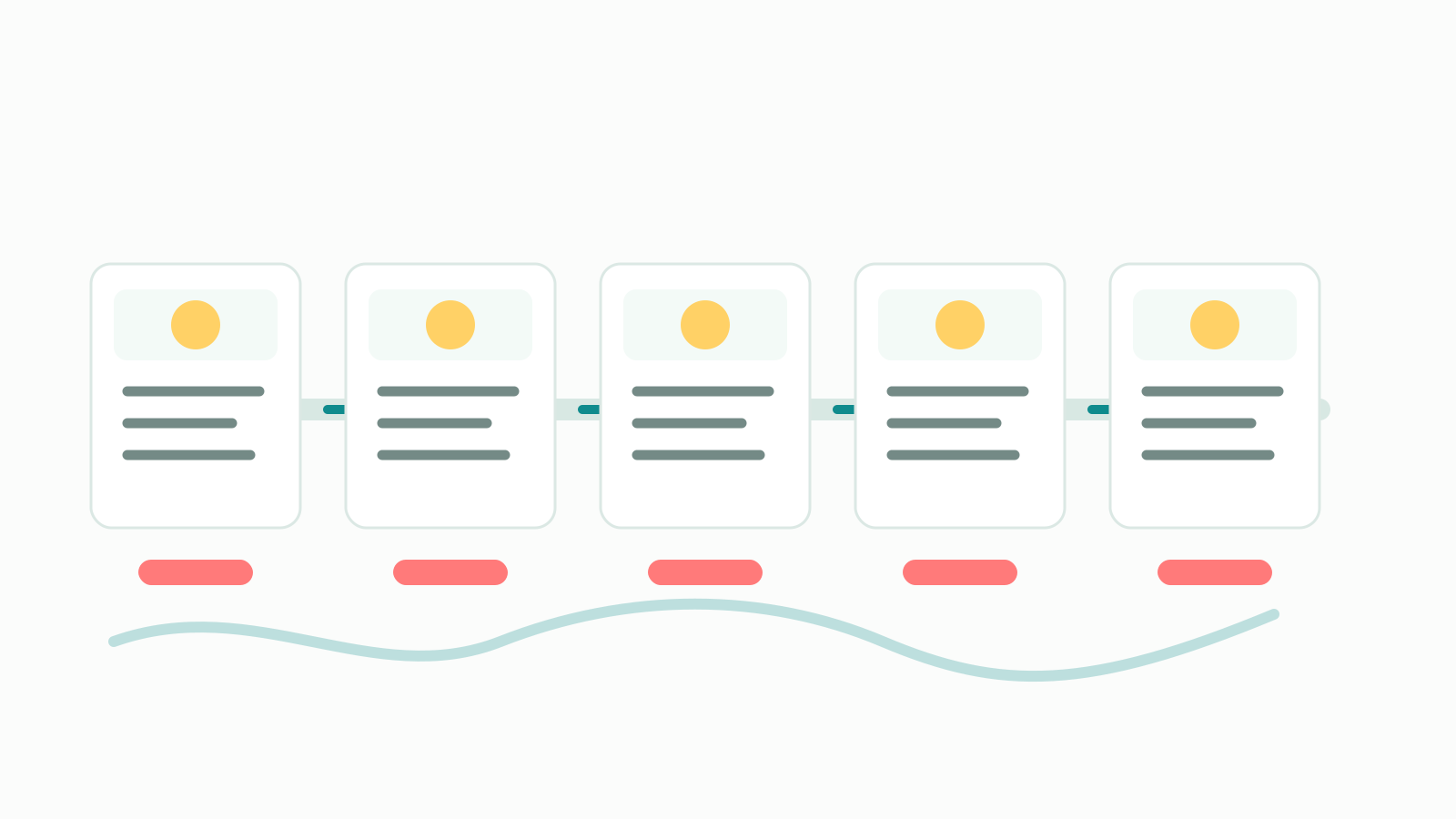
Complete funnel generation is especially valuable when the campaign needs to move through multiple emotional and informational stages. A good lead magnet funnel, for example, cannot jump directly from "here is your free download" to "buy now" without context. It needs to deliver the promised resource, help the subscriber use it, surface the problem behind the resource, introduce the paid solution, and then give the reader a reason to act. AI funnel builders are useful because they can preserve that arc across the entire sequence.
External resources can help you benchmark and improve those sequences after launch. Mailchimp's email marketing benchmarks are useful for comparing open and click performance by industry, Really Good Emails is a strong inspiration library for layout and copy patterns, and HubSpot's email marketing guide covers broad strategy concepts that still apply when AI handles the first draft.
3. Editable Output
AI should assist, not replace, your marketing judgment. Every element should be fully editable before sending. The AI provides a sophisticated starting point based on best practices, but your team maintains final approval over all messaging, timing, and strategy.
4. Integration Flexibility
Modern AI funnel builders work alongside your existing tech stack:
- Email Service Providers: Connect with Amazon SES, Postmark, Mailchimp, ActiveCampaign, and more
- E-commerce Platforms: WooCommerce, BigCommerce, Shopify, Webflow Ecommerce
- Creator Platforms: Podia, Gumroad, Squarespace Commerce
- CRMs: HubSpot, Salesforce, and other customer databases
- Communication Tools: Telegram integration for mobile campaign management
This matters because the best AI email funnel builder should not force you to rebuild your whole marketing stack. If you already use Shopify, WooCommerce, BigCommerce, HubSpot, Postmark, Amazon SES, or another email infrastructure tool, the AI layer should improve campaign creation while your existing platforms continue handling checkout data, contact records, and sending infrastructure. For ecommerce teams, our guide on choosing the right hosting for a digital product store and the article on launching a digital product store in 48 hours can help connect the email strategy to the rest of the selling system.
5. Campaign Templates and Starting Points
The best systems offer proven campaign frameworks you can customize:
- Welcome Sequences: New customer or trial user onboarding
- Lead Magnet Funnels: Convert freebie downloaders into buyers
- Trial Conversion: Turn free users into paying customers
- Cart Recovery: Reclaim abandoned shopping carts
- Product Launches: Build anticipation and drive sales
- Re-engagement Campaigns: Win back inactive subscribers
- Webinar Funnels: Registration, reminders, and follow-up sequences
6. Audience Import and Management
Look for robust contact management capabilities:
- CSV Import: Upload lists with field mapping and duplicate detection
- Platform Connections: Sync contacts from existing email platforms and CRMs
- Segmentation Suggestions: AI-recommended audience segments based on your data
- Custom Fields: Support for detailed contact properties and personalization
7. Pre-send Validation
Campaign-killing mistakes should be caught before launch:
- Link Verification: Ensure all links work and point to correct destinations
- Timing Review: Validate send days, delays, and timezone handling
- Sender Details: Confirm from names, reply-to addresses, and technical setup
- Content Scanning: Check for spam triggers, broken images, and missing elements
- Compliance Checks: Verify unsubscribe links and regulatory requirements
Pre-send validation is one of the most underrated SEO and revenue benefits of an AI email funnel builder. Search traffic can bring visitors to a lead magnet, comparison page, product page, or webinar registration page, but email is often where those visitors become customers. A broken CTA, wrong landing page URL, missing unsubscribe link, or badly timed follow-up can waste the demand you worked hard to earn. Validation protects the handoff between organic acquisition and lifecycle marketing.
8. Transparent Pricing Model
Avoid platforms that charge per email or limit your sending capacity. The best AI funnel builders use straightforward pricing:
- Unlimited Sending: Pay for software features, not email volume
- Bring Your Own Email Service: Link your existing email provider (Amazon SES, Postmark, etc.)
- Clear Usage Limits: Transparent limits on AI generations or contacts
- No Hidden Fees: Know exactly what you're paying for upfront
Top Use Cases for AI Email Funnel Builders
1. SaaS Trial User Onboarding
Challenge: Trial users sign up but don't activate or see value before trial expiration
AI Funnel Solution:
- Email 1 (Immediate): Welcome + first action guidance
- Email 2 (Day 1): Core setup completion with "skip if already done" logic
- Email 3 (Day 3): Feature spotlight showing concrete value
- Email 4 (Day 7): Premium feature preview addressing primary objections
- Email 5 (Day 13): Trial expiration reminder with upgrade incentive
Result: More activated trials, higher conversion to paid plans
For SaaS teams, the most important onboarding emails are rarely the most promotional ones. They are the emails that help a user complete the next activation step. If the product requires installing a tracking pixel, importing a list, creating a first project, inviting a teammate, or connecting a payment provider, the AI-generated sequence should make that action clear. Strong onboarding funnels often perform better when they reduce decision-making rather than adding more product education.
2. E-commerce Welcome Sequences
Challenge: New first-time customers need guidance to become repeat buyers
AI Funnel Solution:
- Email 1 (Immediate): Order confirmation + brand introduction
- Email 2 (Day 1): Product usage tips and care instructions
- Email 3 (Day 7): Customer social proof and review request
- Email 4 (Day 14): Complementary product recommendation
- Email 5 (Day 30): Exclusive repeat customer offer
Result: Higher lifetime value, stronger customer relationships
3. Lead Magnet to Customer Conversion
Challenge: Subscribers who download free resources rarely become paying customers
AI Funnel Solution:
- Email 1 (Immediate): Deliver the promised resource with quick implementation tips
- Email 2 (Day 2): Deeper dive into the resource content with case studies
- Email 3 (Day 5): Common implementation challenges and solutions
- Email 4 (Day 8): Introduce paid offer as premium solution
- Email 5 (Day 12): Limited-time conversion incentive
Result: Higher lead-to-customer conversion rates
4. Abandoned Cart Recovery
Challenge: Shopping cart abandoners need timely, persuasive follow-up
AI Funnel Solution:
- Email 1 (1 hour after abandonment): Gentle reminder with product image
- Email 2 (24 hours later): Social proof and benefit reinforcement
- Email 3 (48 hours later): FAQ or objection handling with incentive
- Email 4 (7 days later): Product recommendation as alternative
Result: Recovered revenue that would otherwise be lost
For more ecommerce-specific examples, see our guide to best cart abandonment recovery tools and the article on best upsell and cross-sell apps for Shopify. AI email funnel builders become even more useful when cart recovery, post-purchase education, replenishment reminders, and cross-sell campaigns all need to share a consistent brand voice.
5. Product Launch Campaigns
Challenge: Building anticipation and driving sales for new product releases
AI Funnel Solution:
- Email 1 (7 days pre-launch): Teaser with early-access opportunity
- Email 2 (3 days pre-launch): Feature deep-dive with benefits
- Email 3 (Launch day): Official announcement with strong CTA
- Email 4 (2 days post-launch): Social proof and urgency reminder
- Email 5 (7 days post-launch): Last-chance or extended offer
Result: Stronger launches with coordinated messaging
6. Webinar Funnels
Challenge: Getting registrants to attend and take desired actions afterward
AI Funnel Solution:
- Email 1 (Immediately after registration): Confirmation with calendar link
- Email 2 (24 hours before): Reminder with what to expect
- Email 3 (1 hour before): Last-minute reminder with access details
- Email 4 (Immediately after): Thank you + recording link for no-shows
- Email 5 (24 hours after): Follow-up offer with clear next steps
Result: Higher attendance rates and better post-webinar conversion
7. Re-engagement Campaigns
Challenge: Inactive subscribers and customers need win-back strategies
AI Funnel Solution:
- Email 1: "We miss you" with value reminder
- Email 2: Updated content or recent developments
- Email 3: Special re-engagement offer or incentive
- Email 4: Final opportunity before list cleanup
Result: Recovered subscribers and cleaner email lists
How AI Email Funnel Builders Compare to Alternatives
Choosing an AI email funnel builder is easier when you understand what it replaces and what it does not replace. In most marketing stacks, it sits between strategy, copywriting, and execution. It does not remove the need for an email service provider, a CRM, or a landing page builder. Instead, it reduces the manual campaign planning and drafting work that usually slows those tools down.
vs. Traditional Email Marketing Platforms
Traditional email tools (Mailchimp, ActiveCampaign, ConvertKit) provide the infrastructure to send emails but require you to create all content and strategy manually. You spend hours in visual editors, writing copy, and configuring automation rules.
AI Funnel Builder Advantage: Strategy and copy generation built-in. Campaign creation takes minutes instead of hours. Consistent messaging across all touchpoints. Lower technical barrier to entry.
vs. Email Marketing Agencies
Hiring an email marketing agency typically costs $3,000-$10,000+ monthly, requires onboarding time, and involves back-and-forth revision cycles.
AI Funnel Builder Advantage: Fraction of the cost. Instant campaign generation. Full control over output. No revision delays. Scalable across multiple campaigns simultaneously.
vs. ChatGPT/AI Writing Tools
Generic AI writing tools can generate email copy but lack email-specific features: no sequencing logic, no send timing, no integration with email platforms, no pre-send validation, no contact management.
AI Funnel Builder Advantage: Purpose-built for email marketing. Complete funnel generation with timing. Platform integration. Pre-send checks. Campaign templates and proven frameworks.
This is why an AI email funnel builder is not just another prompt box. It should understand campaign structure, subscriber state, lifecycle stage, and business goal. If you are exploring adjacent tools, our guide to AI tools automating blog writing workflow shows how general-purpose AI content workflows differ from conversion-focused lifecycle campaigns.
vs. Manual Copywriting
Hiring copywriters costs $100-$500+ per email, involves revision cycles, and requires expertise in email-specific conversion writing.
AI Funnel Builder Advantage: Immediate output at fixed cost. Consistent quality across campaigns. Built-in email marketing best practices. Unlimited iteration without additional cost.
How to Choose the Right AI Email Funnel Builder
Evaluation Criteria
1. Output Quality: Review sample campaigns for copy quality, strategic logic, and professional polish. The AI should generate content ready to send with minimal edits.
2. Integration Capability: Ensure the tool connects with your existing email service provider, CRM, or e-commerce platform. Look for one-click connections and reliable sync.
3. Customization Flexibility: Verify that you can edit every aspect of generated campaigns – copy, timing, automation rules, and design elements.
4. Pricing Structure: Look for transparent pricing without per-email fees. Bring-your-own-email-service models often provide the best value.
5. Support and Resources: Check for documentation, templates, and customer support availability.
6. Trial Availability: Take advantage of free trials to test the tool with your actual use cases before committing.
7. SEO and Content Fit: If your blog, lead magnets, and landing pages are major acquisition channels, the email funnel builder should support campaigns that continue the same promise from the page. A visitor who reads a guide about ecommerce email automation should not enter a generic nurture sequence that ignores ecommerce. Matching the funnel to the acquisition source improves relevance, click-through rate, and eventual conversion.
8. Analytics Feedback Loop: The tool should make it easy to learn from opens, clicks, conversions, unsubscribes, replies, and revenue. Even if your sending platform owns the raw analytics, the AI funnel workflow should help you turn those metrics into better subject lines, stronger CTAs, and smarter segmentation.
Red Flags to Avoid
- Per-Email Pricing: Avoid platforms that charge more as you send more emails
- Lock-in Requirements: Steer clear of systems that require using their sending infrastructure
- Black Box AI: Be wary of tools that don't let you see or edit the generated content
- Overpromising Results: Be skeptical of guaranteed conversion numbers or unrealistic claims
- Poor Integration: Avoid tools that don't connect with your existing platforms
Getting Started with EmailFunnelAI: A Practical Example
EmailFunnelAI exemplifies the modern AI email funnel builder approach. Here's how the workflow works in practice:
Step 1: Define Your Campaign
Start with a clear, specific description of what you want to accomplish:
"Build a 5-email welcome campaign for new SaaS trial users. Help them complete setup within 48 hours, show core product value by day 3, address pricing objections around day 5, and drive upgrade before trial expiration."
Step 2: AI Generates Complete Funnel
EmailFunnelAI creates:
- Campaign brief summarizing goals and approach
- 5 strategically sequenced emails with subject lines and body copy
- Send timing based on trial user psychology
- Follow-up logic for different user behaviors
- Pre-send checklist before launch
Step 3: Review and Customize
Your team reviews and edits:
- Adjust brand voice and terminology
- Add specific product details and features
- Fine-tune timing for your audience
- Validate links and technical details
- Ensure compliance with your standards
Step 4: Connect and Launch
- Import contacts or connect your CRM
- Link your email service provider (Amazon SES, Postmark, etc.)
- Review final pre-send checks
- Launch campaign with confidence
Key Features That Set EmailFunnelAI Apart
14-Day Free Trial: Full access without credit card requirement Telegram Integration: Build and manage campaigns from Telegram with mobile updates Bring Your Own Email Service: Link Amazon SES, Postmark, or your existing provider Platform-Specific Campaigns: Optimized templates for WooCommerce, BigCommerce, Podia, Gumroad, and more Pre-send Validation: Catch mistakes before they reach your audience Team Collaboration: Multiple team members with role-based access Transparent Pricing: One-time payment options with lifetime access
You can learn more directly at EmailFunnelAI, or continue with our related deep dive on how EmailFunnelAI's agentic workflow saves hours for marketing teams. The key decision is not whether AI can write emails; it is whether the tool can turn a campaign goal into a sequence your team can review, improve, launch, and measure.
Best Practices for AI Email Funnel Success
1. Be Specific in Your Campaign Briefs
The quality of AI-generated output directly correlates with input specificity. Instead of:
"Create a welcome email sequence"
Try:
"Build a 7-email welcome sequence for new Shopify merchants who just installed our inventory management app. Focus on getting them to sync their first product catalog (Email 1-2), set up low-stock alerts (Email 3-4), and understand our analytics dashboard (Email 5-7). Target busy e-commerce owners who value time savings over technical details."
2. Treat AI Output as a Starting Point
AI funnel builders provide sophisticated drafts based on proven frameworks, but you should always:
- Review for brand voice consistency
- Add specific product details and examples
- Validate claims and statistics
- Test subject lines with your audience
- Adjust timing based on your engagement data
3. Iterate Based on Performance
Use your email platform's analytics to optimize:
- Subject Lines: A/B test different variations
- Send Times: Adjust based on open rate patterns
- Content: Update messaging based on click-through data
- Sequencing: Modify email count and timing for better engagement
- Segmentation: Refine audience targeting for higher relevance
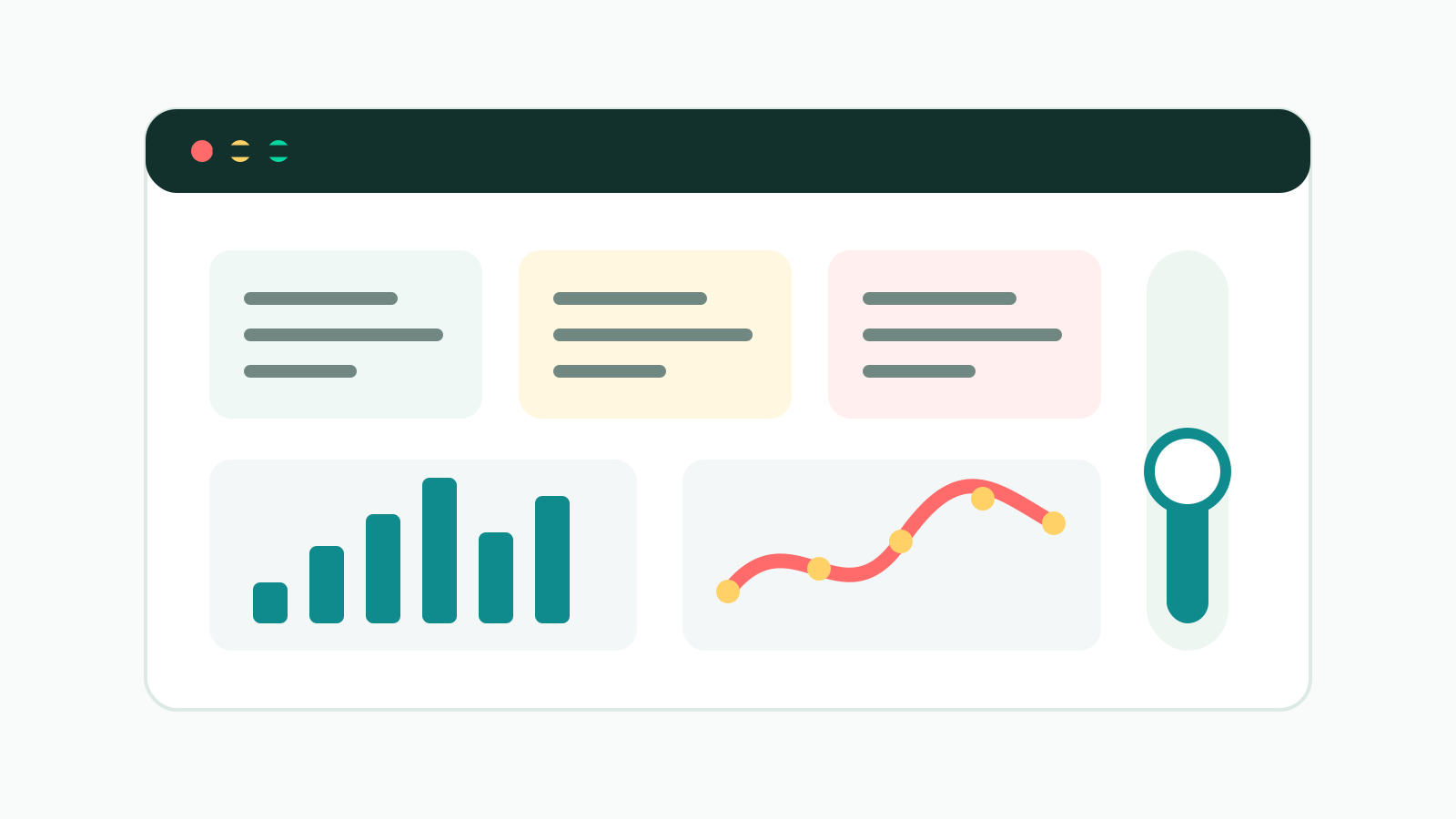
Performance data should influence the next AI prompt. For example, if email three has a strong open rate but weak click-through rate, the problem may not be the subject line; it may be the offer framing, CTA placement, or mismatch between the email promise and the landing page. If email one has high clicks but later emails collapse, the sequence may be front-loaded and needs a stronger bridge between education and conversion. The best teams use AI to accelerate iteration, not just first drafts.
For testing methodology, our guide to best A/B testing tools for landing pages and emails is a useful next read. For landing page alignment, see best landing page builders for high conversions. Email funnels perform better when the email promise, CTA, and destination page all feel like one connected experience.
4. Maintain Human Oversight
AI accelerates campaign creation but shouldn't replace strategic judgment:
- Review All Content: Ensure accuracy and brand alignment
- Validate Claims: Don't rely on AI for statistics or facts
- Approve All Sends: Nothing goes out without human review
- Monitor Performance: Watch for issues AI can't detect
5. Build a Template Library
Save successful campaigns as templates for future use:
- Document what worked well
- Note audience-specific variations
- Create swipe files for different industries
- Build on proven successes rather than starting from scratch
The Future of AI Email Marketing
AI email funnel builders represent just the beginning of intelligent marketing automation. As the technology evolves, expect to see:
Predictive Analytics: AI that optimizes send times, content, and sequencing based on individual subscriber behavior patterns
Dynamic Personalization: Real-time content adaptation based on recipient data, engagement history, and predictive modeling
Multichannel Orchestration: AI that coordinates email, SMS, push notifications, and other channels into unified customer journeys
Automated Optimization: Continuous testing and refinement of subject lines, content, and timing without manual intervention
Conversational Interfaces: Natural language campaign building through chat interfaces and voice commands
The brands that adopt these tools early will gain significant advantages in campaign speed, consistency, and performance.
The next major step will be closed-loop optimization. Instead of manually reviewing every campaign report, marketers will increasingly ask questions such as "which segment should receive a shorter trial conversion sequence?" or "rewrite the third email for subscribers who clicked but did not buy." AI funnel builders will become more useful as they connect campaign creation, behavioral analytics, and lifecycle strategy in the same workflow.
Common Questions About AI Email Funnel Builders
Are AI-generated emails as effective as human-written ones?
AI email funnel builders are trained on high-performing email campaigns and conversion copywriting principles. While they may not match the creativity of the world's best copywriters, they typically outperform average human writers because they consistently apply proven frameworks and avoid common mistakes. The key is treating AI output as a sophisticated starting point that you can refine with your brand voice and specific insights.
Can I customize the AI-generated emails?
Absolutely. The best AI funnel builders generate fully editable content. You maintain complete control over final messaging, timing, and strategy. AI handles the heavy lifting of structure and initial copy, while your team ensures brand alignment and accuracy.
Do I need technical skills to use an AI email funnel builder?
No. Modern AI funnel builders are designed for marketers, not developers. If you can describe your campaign goals in plain language, you can build sophisticated funnels. Technical integration with email platforms typically involves simple copy-paste configuration.
How does pricing work compared to traditional email platforms?
Most AI funnel builders use SaaS pricing models based on features or contacts rather than email volume. Many use a "bring your own email service" model where you connect your existing email provider (Amazon SES, Postmark, etc.) and only pay the AI platform for software features. This often costs significantly less than traditional email marketing platforms.
What types of businesses benefit most from AI email funnel builders?
Any business that relies on email marketing can benefit, but they're particularly valuable for:
- SaaS companies with trial conversion funnels
- E-commerce stores needing welcome and abandonment sequences
- Course creators and digital product sellers
- Marketing agencies managing multiple clients
- Small businesses without dedicated email marketing teams
Can AI funnel builders replace my email marketing platform?
Generally, no. AI funnel builders typically specialize in campaign generation and work alongside your existing email service provider or marketing automation platform. You'll still need infrastructure to actually send emails, manage deliverability, and store contacts.
Think of the AI funnel builder as the planning and production layer. Your email service provider remains the delivery layer. Your CRM remains the customer memory layer. Your ecommerce platform or SaaS app remains the transaction and product behavior layer. The value comes from making those layers work together with less manual drafting, fewer campaign delays, and stronger message consistency.
How do I ensure AI-generated content matches my brand voice?
Provide clear brand guidelines in your campaign brief, then review and edit the AI output to align with your voice. Most teams find that after a few iterations, they can prompt the AI more effectively to generate content that requires minimal editing.
Measuring AI Email Funnel Performance
To maximize the value of your AI funnel builder investment, track these key metrics:
Conversion Metrics
- Click-to-Conversion Rate: Percentage of clicks that result in desired actions
- Revenue per Email: Direct and attributed revenue from campaigns
- Trial-to-Paid Rate: For SaaS, percentage of trials converting to paid plans
- Cart Recovery Rate: Percentage of abandoned carts recovered
Engagement Metrics
- Open Rate: Subject line and timing effectiveness
- Click-Through Rate: Content relevance and CTA strength
- Unsubscribe Rate: Content quality and list fit
- Engagement Over Time: How engagement changes through the sequence
Efficiency Metrics
- Campaign Creation Time: Hours saved compared to manual creation
- Time to Launch: Speed from concept to live campaign
- Revision Cycles: How many edits campaigns need before approval
- Team Capacity: Number of campaigns managed with existing resources
Track these metrics before and after adopting an AI funnel builder to quantify the impact on your marketing operations and results.
It is also worth tracking qualitative metrics. Are campaigns easier for the team to approve? Are fewer details being lost between strategy documents and email platform setup? Are sales, support, and product teams seeing fewer mismatched promises? Those operational improvements may not show up in open rates immediately, but they compound over time and make the entire lifecycle marketing system easier to manage.
For deliverability and rendering, external testing tools such as Litmus can help check how emails display across clients, while platform benchmarks from providers such as Mailchimp can help set realistic expectations. For inspiration, Really Good Emails remains one of the best public libraries for studying how strong brands structure announcements, newsletters, onboarding messages, and promotional campaigns.
Conclusion: Is an AI Email Funnel Builder Right for You?
If your team struggles with any of these challenges, an AI email funnel builder is likely a good fit:
- Campaigns take too long to create and launch
- Inconsistent messaging across email sequences
- Bottlenecks in copywriting and campaign planning
- Limited expertise in email conversion optimization
- Need to scale email marketing without scaling headcount
- Managing multiple clients or campaigns simultaneously
The right AI email funnel builder transforms email marketing from a time-consuming creative bottleneck into a streamlined, strategic capability. You get faster campaign launches, more consistent messaging, and data-driven optimization – all while maintaining control over final output.
The key is choosing a platform that balances AI power with human control.
EmailFunnelAI exemplifies this balance: sophisticated AI generation with full editing control, platform integration with bring-your-own-email-service flexibility, and comprehensive features without per-email pricing penalties.
The future of email marketing belongs to teams that leverage AI to eliminate repetitive creative work while focusing their expertise on strategy, brand building, and customer relationships. An AI email funnel builder is the tool that makes this possible today.
Ready to Build Your First AI Email Funnel?
Most AI funnel builders, including EmailFunnelAI, offer free trials so you can experience the technology with your own campaigns and audience. The typical workflow:
- Start with a clear campaign goal and audience definition
- Use natural language to describe what you want to accomplish
- Review the AI-generated funnel with your team
- Customize content, timing, and strategy as needed
- Connect your email service provider and import contacts
- Run pre-send validation checks
- Launch and monitor performance
Within days, you'll have live, sophisticated email campaigns that would traditionally take weeks to build – and you'll have the foundation to scale your email marketing without scaling your workload.
The question isn't whether AI will transform email marketing – it's whether your team will lead or follow in that transformation.
If you want to keep building the surrounding marketing system, continue with our guides on automating your SaaS sales funnel with AI agents, building a content calendar that drives organic traffic, and creating a blog that ranks in AI search. An AI email funnel builder works best when the rest of your acquisition engine gives it relevant audiences, clear offers, and strong reasons for subscribers to keep engaging.
EmailFunnelAI is an AI-powered email funnel builder that helps marketing teams create complete email campaigns in minutes. From campaign idea to ready-to-send funnels with emails, follow-ups, timing, and pre-send checks – all generated from one simple prompt. Start your 14-day free trial at emailfunnel.ai – no credit card required.